
Scotland isn’t all whisky, bagpipes, and mysterious loch-dwelling monsters – one lesser-known fact about this part of the UK is that it is a haven for bluebell flowers.
Picture it: carpets of blue flowers as far as the eye can see – and it’s well worth checking out.
So, with that in mind, we’ve put together a nifty little bluebells Scotland guide to get you going for some flowery goodness.
Bluebells Scotland: Where (and When) to See Them
Unlike many flowers in Scotland, bluebells are rarely found growing in domestic gardens, parks, or fields.
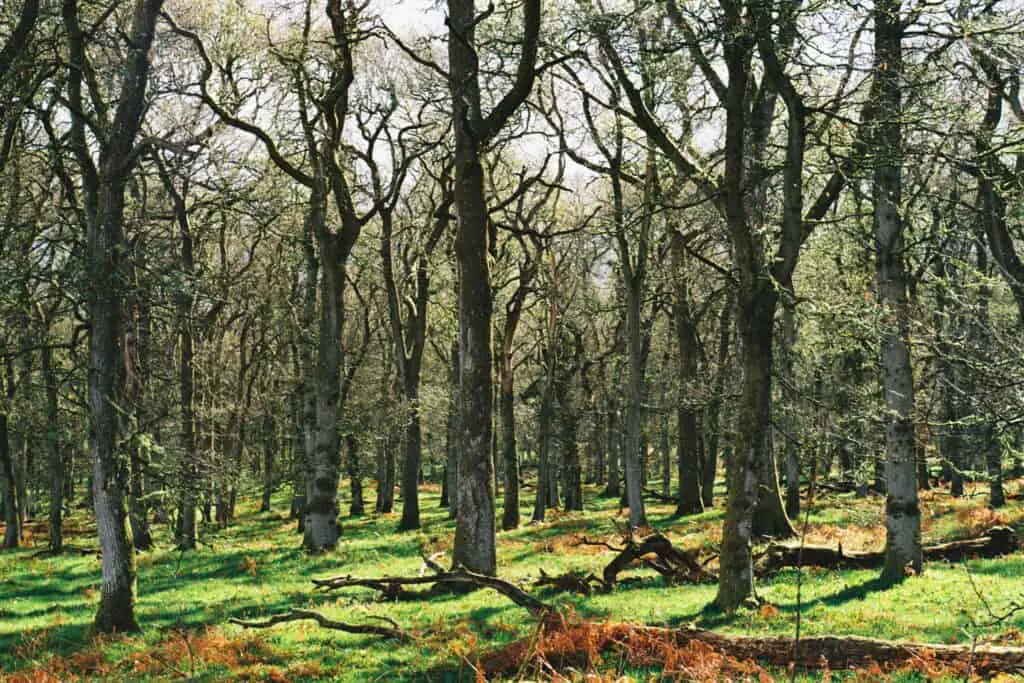
Bluebells are famed for their woodland habitat and can be quite a sight amongst the brown hues of the forest floor and tree trunks.
However, because the bluebell’s lifespan is fairly short (they only blossom between April and May, typically), getting to witness these blue beauties in all their splendor may require some planning.
Places to See Scottish Bluebells
Bluebell Wood
Given the name, you have a very good chance of seeing beds of bluebells in the Johnstone-based Bluebell Wood.
Owned and managed by Forestry and Land Scotland, Bluebell Wood is an open woodland hillside area just 9 minutes drive from Paisley.
Formerly a part of the nearby Johnstone Castle, this dog-friendly woodland area is a great place to view a sea of bluebells in the springtime and makes for an excellent detour for those visiting the nearby Rannoch Wood, Windyhill, and Boden Boo.
Please note – there isn’t a car park at Bluebell Wood. There is, however, parking, toilets, and shops in the nearby Johnstone.
Kinclaven Bluebell Woods
Undoubtedly, the most famous bluebell woods in Scotland is Kinclaven in Perth.
Owned by the Woodland Trust, Kinclaven Bluebell Woods offers a spectacular sight of rows of bluebells that bedeck much of the 200 acres of woodland.
Super accessible (you can visit Kinclaven by car, train, or bus), this magical bluebell hotspot also features nearby parking and is great for those who wish to peep some of Scotland’s wonderful woodland wildlife.
Kinclaven Bluebell Woods can be found in the Murthly area of Perthshire near the River Tay.
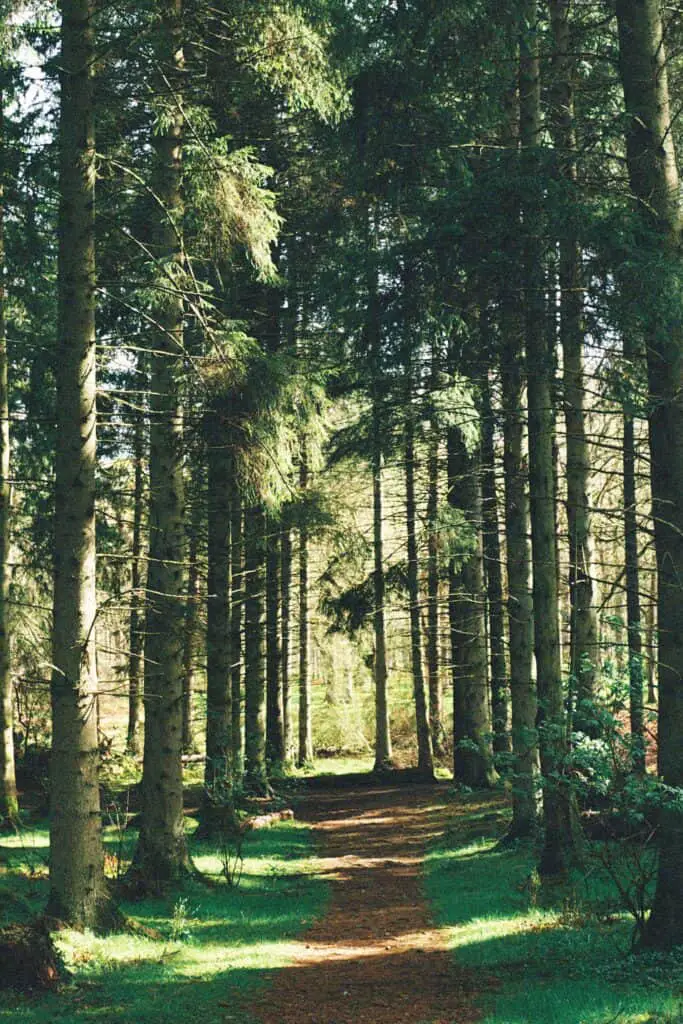
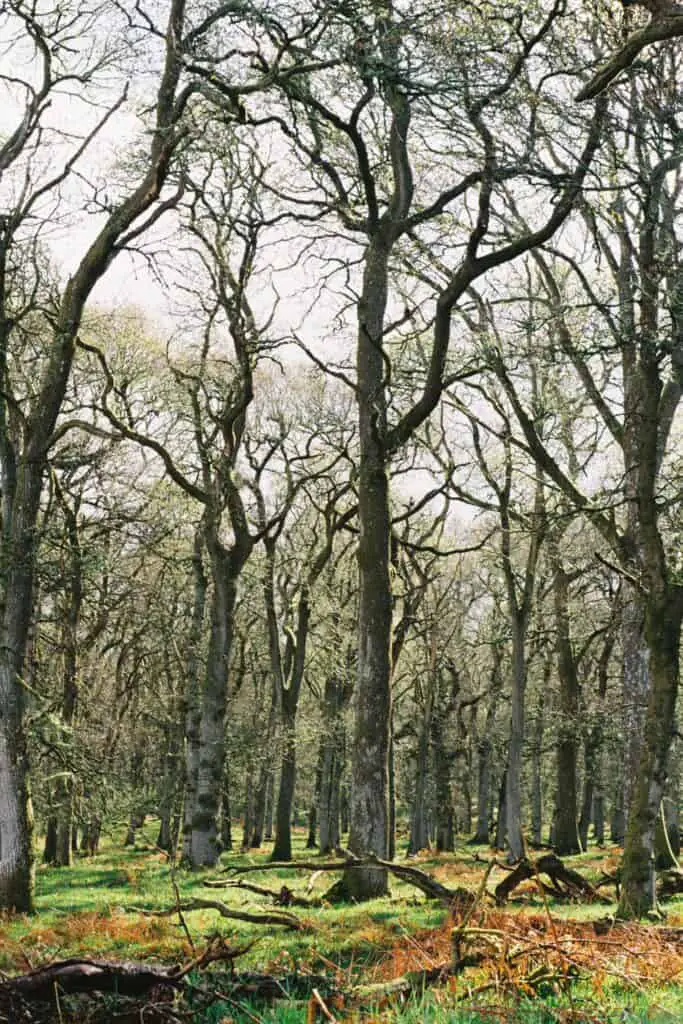
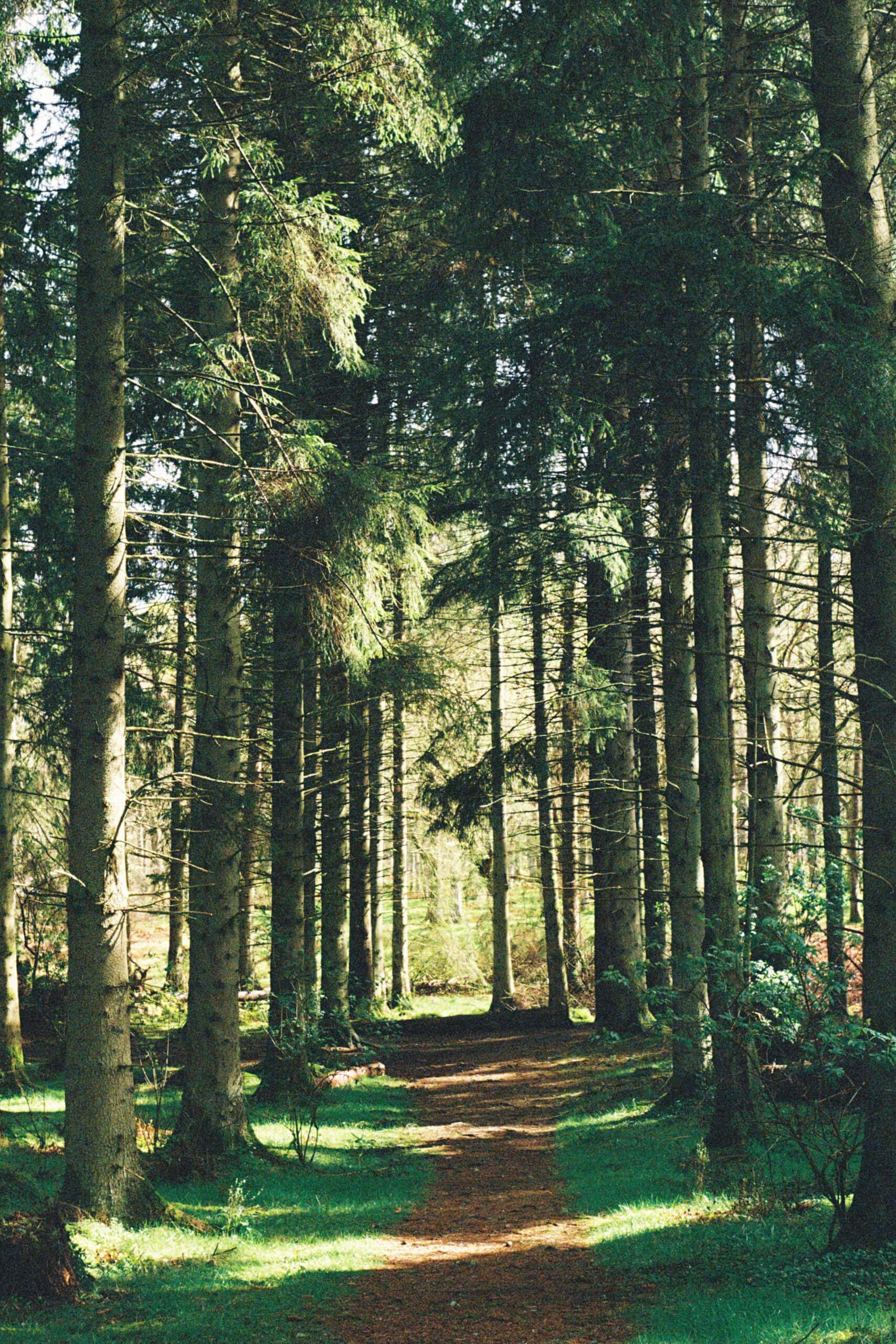
Sadly, I was a bit too early for the bluebells but the woods themselves are stunning even without the flowers!
Ardmaddy Castle Gardens
Located in Argyll and Bute, those wanting to combine a bluebell viewing with a castle visit can have their cake and eat it too.
The castle is surrounded by woodland known for its bluebell presence in the springtime (as well as daffodils, adding some yellow to the otherwise ocean of blue flowers).
Those visiting can also take in the floral sights of the Walled Garden, known for its rhododendrons, as well as more unusual and rare shrubs.
If all this rural beauty starts to work up an appetite, you can even purchase seasonal fresh fruit and veggies on-site.
Ardmaddy Castle Gardens is open all year round, Monday – Sunday, and the admission cost is just £5. There are also toilets, parking, and accommodation too.
Mount Stuart
Sticking with the Bute area for a sec, why not take in the 300 acres of bluebelly goodness of the awe-inspiring Mount Stuart in Argyll?
Those with a passion for botanicals can also enjoy the fragrant and abundant beds of daffodils, snowdrops, meconopsis, rhododendrons, and much more.
As well as this, there are water gardens, sculptures/garden art, wild berries, tree collections, spring bulbs, a walled garden, and woodland wildlife to be admired.
Mount Stuart is open seasonally and the general adult admission cost is £13.70. Facilities include a shop, toilets, parking, accommodation, and events.
Glenwhan Gardens & Arboretum
Boasting incredible views of Luce Bay and the Mull of Galloway, Glenwhan Gardens offers guided tours (which need to be pre-arranged) of these magnificent woodland gardens from October to March.
Featuring bluebells, rhododendrons and daffodil displays, herbaceous borders & plantings, rose gardens, water gardens, sculptures, and abundant wildlife (including red squirrels!), Glenwhan makes for a fab day out.
The gardens are also super accessible for those with mobility issues, and facilities include toilets, a restaurant/cafe, plant sales, a shop, and a car park.
Kirkland Gardens
Located in Fife, the magnificent Kirkland Gardens date all the way back to 1832 and features expansive florals, a terraced walled garden, vegetable beds, a bog garden, and 18 espalier fruit trees.
The gardens are open for guided tours between Friday to Sunday only, in which catering can be arranged (cakes, cream teas, soups, etc.), and even offer half-day gardening courses!
Admission is £5 per person and the site includes toilets and parking.

Geilston Gardens
The small and intimate 10-acre garden of Geilston in Dumbarton is a horticulturist’s dream.
Featuring azaleas, herbaceous, bluebells, a cherub bird bath, a dipping tank, and even a waterfall, Geilston Gardens has a private rural garden charm to it.
Not only that, the impressive kitchen garden boasts an array of delicious fresh veggies (which are for sale, along with seasonal fruit).
Be mindful that the garden is closed from November through til March, but is open seven days a week during opening season, with admission costs starting at £6.
The area is wheelchair accessible and features toilets and parking.
Teasses Gardens
Sweeping across the impressive Teasses Estate in Leven is layer upon layer of bluebells, as well as lilies, roses, daffodils, snowdrops, rhododendrons, and primulus (to name but a few).
Equally impressive is the hall itself, which looks more like a mini castle, and boasts its own lochan!
Visitors can enjoy the six acres of Victorian walled gardens, the ravine garden, and sweeping carpets of spring bulbs.
Oh, and if a day visit doesn’t quite quench your botanical thirst, you can stay the night in one of the hall’s beautiful accommodation rooms (which sleeps up to 6 people).
The gardens are open between the months of April and October with visitations being by appointment and group-only.
Cluny House
Spread over the small but spectacular woodland garden of Cluny House in Perthshire, this peaceful spot dates back to the 1950s and hosts a plethora of trees, shrubs, lilies, primulas, and, of course, bluebells.
The garden is cared for on a strictly organic regime, involving zero chemicals or toxins that could potentially harm the ecosystem – all weeds are removed by hand and large quantities of leaf mould are added to enrich the soil.
Unfortunately, the garden suffered significant damage during the 2021 Storm Arwen, of which the owners set up a GoFundMe page, should visitors wish to donate to help with the restoration project.
Dawyck Botanic Gardens
Located in the serene Scottish Borders, Dawyck Botanic Gardens (which is owned and cared for by the Royal Botanic Garden Edinburgh) features a host of enchanting trees from all corners of the globe.
This includes plants from the mountain regions of China, Japan, Europe, Nepal, and North America.
Wondering how they survive the Scottish climate?
Well, the Scottish Borders feature cool summers and snowy winters, of which are in unison with all the carefully curated trees living in the garden – hence why they are selected from mountain areas only!
As for the floral side of things, visitors can enjoy the myriad colours and fragrances of azaleas, blue poppies, snowdrops, and more.
Entry is free for RBGT members, with the non-member’s price starting at £8.70. Opening times are 10 am to 4 pm from February to the end of November.
As for furry friends, only highly trained assistance animals are permitted. And again, for those deadset on seeing bluebells, you must visit the gardens during springtime – although each season has its own spectacular botanical wonders to be admired!
Bluebell Scotland Season
Bluebells (similar to daffodils and snowdrops) are part of the spring bulbs family, therefore typically can only be enjoyed from late March until early June.
FAQs
Bluebell season in Scotland is typically mid-April to late May, depending on whether the country has had an early or late spring.
To really see them in full bloom and in all their blue glory, your best bet is to visit in May.
Scotland is rife with mythology and folklore, typically connecting to Gaelic stories of fairies and witches, and the bluebell is no exception.
According to old Pagan belief, if you pick a bluebell, you will be led astray by fairies, lost forever more.
To walk through them can mean fairy enchantment or even death (don’t worry, peeps – there’s no evidence to back this up!).
Although similar in look, Scottish and English bluebells are actually from different plant families.
The Scottish bluebell is part of the Harebell family, while the English bluebell is part of the Hyacinthe family.
The plant name of the Scottish bluebell is Campanula rotundifolia, otherwise known as the common harebell (the latter being significantly less of a tongue-twister!).
As this blog suggests in good detail, they do indeed! They will bloom in spring only and can be typically found in woodland areas.
More Scotland Posts
- Loch Cluanie: Why This Man-Made Loch is SO Worth a Visit in 2026!
- Chocolatarium Edinburgh: An Honest Review

- The Dome Afternoon Tea Review – Worth the Hype?

- Glen Etive Road: Mountains, Ravines, Ancient Battle Grounds, and, er, James Bond?!

- Victoria Street Edinburgh: A Guide to Auld Reekie’s Most Magical Road!

- Castles Near Edinburgh: 8 Scottish Palaces You Can Spend the Night In

Free Resources





And as always, you can find more sustainable travel content on Instagram @VoyagingHerbivore, Youtube, and TikTok and to get updates straight to your inbox, enter your email below.
If you found this guide helpful and want to help us keep these resources free,
please consider making your next Amazon, Expedia, Hostel World, Etsy, Trivago, and Booking.com purchase through our links (just click right on those words – you can do it right now and unless you clear your cookies before your next purchase, it will remember). It costs you no extra and gives us a small commission. Thank you!


Leave a Reply